
New article published: “Assessing the impact of interregional mobility on COVID19 spread in Spain using transfer entropy”
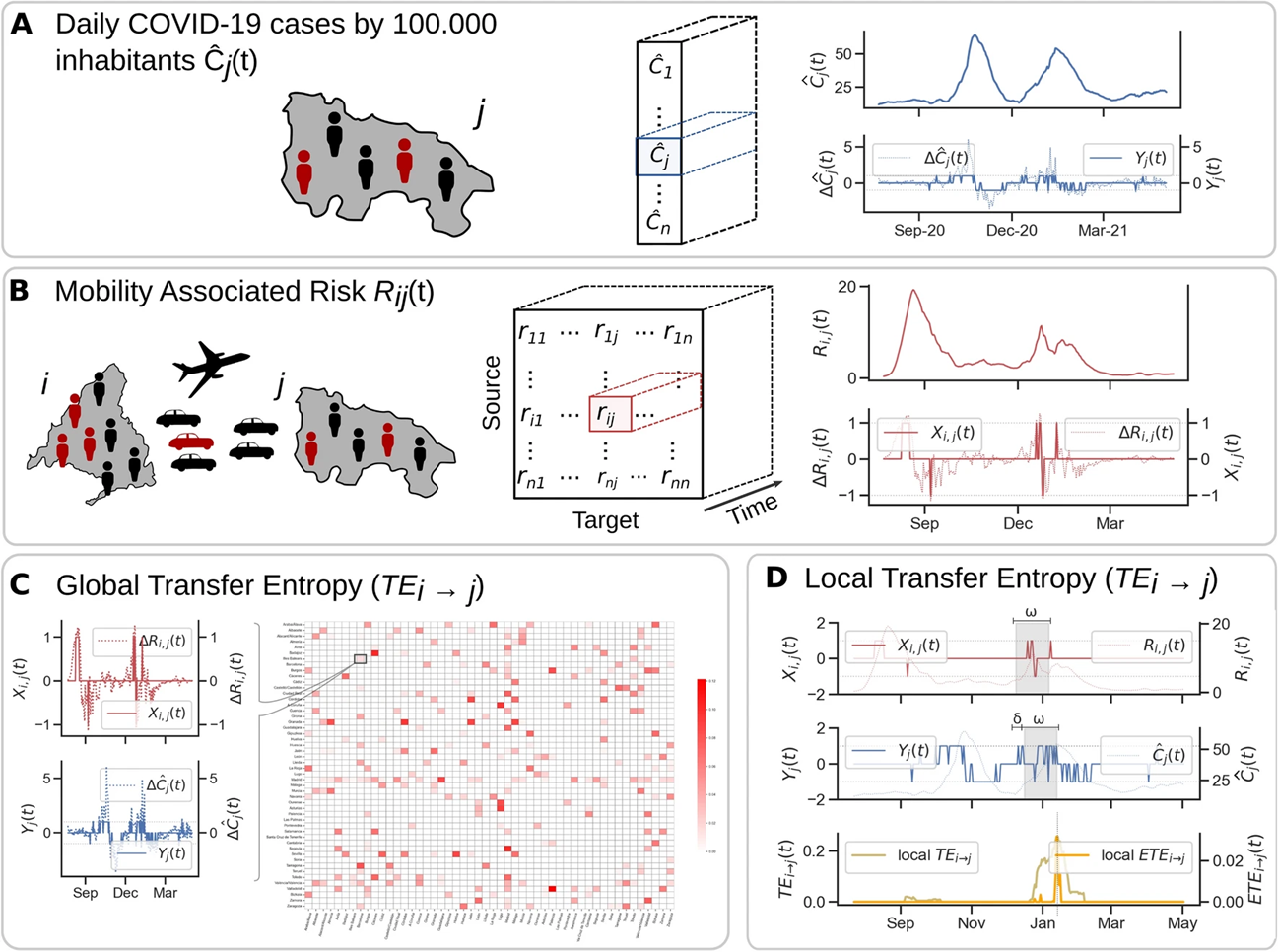
Human mobility played a key role in shaping the spatiotemporal dynamics of COVID-19 transmission. The study of how interregional mobility impacted the spread of the epidemic in Spain, using Transfer Entropy (TE) method, is the focus of the article “Assessing the impact of interregional mobility on COVID-19 spread in Spain using transfer entropy”, published in Scientific Reports.
The study derived a “mobility-associated risk” time series using anonymized phone-based origin–destination data and regional infection prevalence. Then, the directional information flows between regions using TE to uncover transmission patterns were quantified.
The results shine a light on the key drivers of the epidemic. Madrid ranked highest in total TE transfer, but its directionality index was slightly negative, meaning it received more information than it transferred, revealing unexpected asymmetries in influence dynamics.
Temporal trends matter, too. In the Summer, Lleida became a top driver—likely reflecting seasonal worker movement that triggered outbreaks in Zaragoza and eventually Madrid. These insights match known epidemiological timelines.
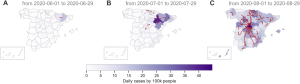
Figure 1: Transfer of entropy between Spanish provinces during the Summer 2020.
Using both static and dynamic (local) measures, TE and its bias-corrected variant, Effective Transfer Entropy (ETE), changes across time were captured, and confirmed that mobility data (left panel from Figure 2) significantly improved interpretability over case-only analyses (right panel).
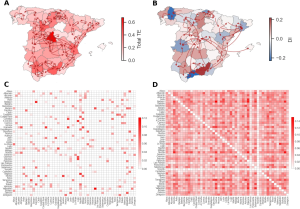
Figure 2: Transfer of entropy between provinces.
The study also conducted simulation experiments using SIR (Susceptible-Infected-Recovered) metapopulation models. These confirmed that incorporating mobility revealed true influence paths; while ignoring mobility introduced misleading connections, TE patterns aligned with actual commuter networks.
Altogether, the joint work between MePreCiSa and CREXDATA projects provides a novel approach to study the effect of interregional mobility on epidemic spread and to uncover spatio-temporal patterns of mobility-driven transmission, offering valuable insights to inform the timing and regional targeting of non-pharmaceutical intervention (NPI).
The complete article can be found in the following link: https://www.nature.com/articles/s41598-025-17218-4#Abs1
Cite this article as: Ponce-de-Leon, M., Pontes, C., Arenas, A. et al. Assessing the impact of interregional mobility on COVID19 spread in Spain using transfer entropy. Sci Rep 15, 31504 (2025). https://doi.org/10.1038/s41598-025-17218-4.

